

Scope 1 emissions
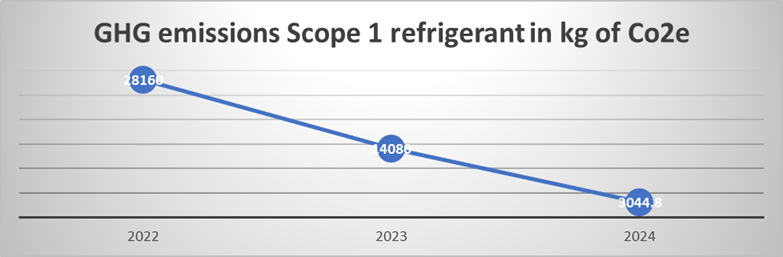
Makkah for Industry Co. (MASA PACK) has achieved a significant reduction in greenhouse gas (GHG) emissions associated with air-conditioning systems through continual monitoring and strict implementation of preventive maintenance programs.
As a result of timely maintenance activities, early detection of refrigerant losses, and immediate corrective actions to prevent Freon leakage within the cooling cycle, CO₂e emissions from air-conditioning systems were reduced substantially over the reporting period:
- 2022: 28160 Kg CO₂e
- 2023: 14080 Kg CO₂e
- 2024: 3044.8 Kg CO₂e
This represents an overall reduction of approximately 89% between 2022 and 2024, demonstrating the effectiveness of preventive maintenance, leakage control, and operational discipline in minimizing fugitive emissions. These actions support the company’s broader climate-change mitigation strategy and continuous improvement commitments
Scope 2 from purchased electricity:

MASA PACK monitors electricity consumption as a key driver of Scope 2 greenhouse gas (GHG) emissions, in accordance with the GHG Protocol (Scope 2 – Purchased Electricity). Continuous tracking of energy use enables the company to directly manage and reduce indirect emissions associated with grid electricity.
In 2023, total electricity consumption decreased to 236.1 MWh, compared to 244.0 MWh in 2022, which led to a corresponding reduction in Scope 2 GHG emissions from 111.5 kg CO₂e in 2022 to 107.9 kg CO₂e in 2023. This improvement reflects the effectiveness of targeted energy optimization actions, including enhanced preventive maintenance, improved load management, equipment efficiency upgrades, and increased employee awareness on energy conservation.
In 2024, electricity consumption remained relatively stable at 237.8 MWh, despite increased production volumes. As a result, Scope 2 emissions also stabilized at 108.6 kg CO₂e, demonstrating sustained control of energy-related emissions and improved electricity intensity (kWh per kg of product).
By 2025, MASA PACK further strengthened its energy management approach through continued optimization measures and the integration of renewable energy sources, including the installation of solar panels. This contributed to a further decline in Scope 2 emissions to approximately 95.8 kg CO₂e by October 2025, as reflected in the emissions trend. These initiatives support MASA PACK’s commitment to UN SDG 7 (Affordable and Clean Energy) and UN SDG 13 (Climate Action), while meeting EcoVadis environmental performance criteria.
Scope 3
Upstream GHG emissions
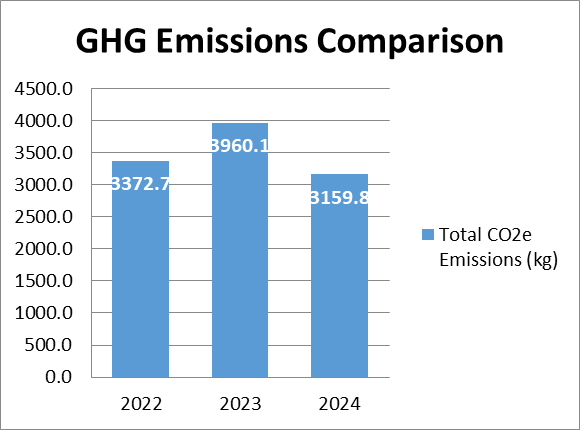
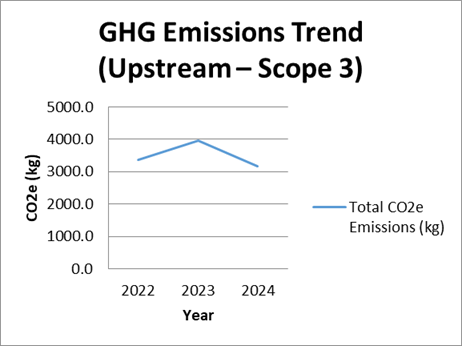
- 2023 CO₂e emissions: 3,960 kg
- 2024 CO₂e emissions: 3,159 kg
- Absolute reduction (2023–2024): 800.3 kg CO₂e
- Percentage reduction (2023–2024): ≈ 20.2%
Reduction of Upstream Scope 3 Emissions Through Localized Sourcing
As part of MASA PACK’s environmental strategy, the company has taken targeted actions to reduce upstream Scope 3 greenhouse gas emissions while simultaneously supporting local economic development and supply chain resilience.
Between 2023 and 2024, CO₂e emissions associated with upstream raw-material transportation decreased by approximately 20.2%, falling from 3,960 kg CO₂e to 3,159 kg CO₂e. This measurable reduction demonstrates the effectiveness of restructuring the supply chain toward localized sourcing and shorter transportation distances.
A key contributor to this improvement was the strategic discontinuation of the foreign raw-material supplier “Tasneaa”, which required long-distance international transportation. The supplier was replaced with qualified local suppliers, significantly reducing transport routes, fuel consumption, and related emissions, while also strengthening supply continuity and responsiveness.
This initiative reflects MASA PACK’s commitment to responsible procurement, climate impact reduction, and continuous environmental improvement, in alignment with EcoVadis Environment criteria and internationally recognized climate-management principles.
Scope 3 Emissions – Downstream Transportation and Distribution
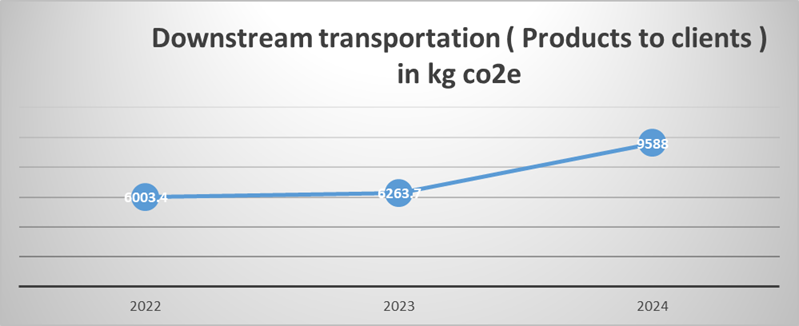
MASA PACK assesses and reports greenhouse gas emissions arising from the transportation of finished products to customers under Scope 3 – Downstream Transportation and Distribution. This assessment forms part of our environmental management approach to identify indirect climate impacts across the value chain and supports continuous improvement in logistics efficiency.
In 2022, the company completed 423 shipments covering an annual distance of 26,102 km, generating 6,003.4 kg CO₂e. In 2023, shipments slightly decreased to 390; however, delivery distances increased to 27,233 km, resulting in 6,263.7 kg CO₂e. In 2024, MASA PACK recorded a significant increase in sales volume and customer base, leading to 528 shipments and 40,754 km of transportation mileage. As a result, downstream transportation emissions increased to 9,588 kg CO₂e.
The rise in Scope 3 emissions in 2024 is directly linked to business growth and expanded market coverage rather than operational inefficiencies. MASA PACK remains committed to mitigating these impacts through logistics optimization measures, including shipment consolidation, route planning improvements, and engagement with transport providers to enhance fuel efficiency and reduce emissions intensity per unit delivered.
Scope 3 GHG Emissions – Business Travel
MASA PACK monitors and reports greenhouse gas (GHG) emissions arising from employee business travel in accordance with the GHG Protocol Corporate Value Chain (Scope 3), Category 6: Business Travel. Business travel emissions are primarily associated with air travel undertaken for customer meetings, technical support, and business development activities.
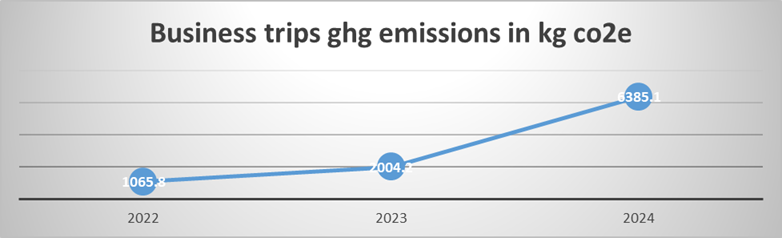
In 2022, Scope 3 GHG emissions from business trips totaled 1,065.8 kg CO₂e. This figure increased to 2,004.2 kg CO₂e in 2023, reflecting expanded commercial and operational activities. In 2024, emissions rose to 6,385.1 kg CO₂e, driven mainly by a significant increase in international travel linked to business growth, market expansion, and engagement with a wider customer and supplier base.
Despite the increase, MASA PACK recognizes the importance of managing and reducing emissions from business travel. The company is committed to optimizing travel planning, prioritizing virtual meetings where feasible, and consolidating trips to minimize environmental impact while supporting business continuity and growth. This approach contributes to UN SDG 13 (Climate Action) by promoting responsible travel practices and improved carbon management.
Total Greenhouse Gas Emissions Performance (Scopes 1, 2, and 3)
MASA PACK consolidates and monitors its greenhouse gas (GHG) emissions across Scope 1 (direct emissions), Scope 2 (purchased electricity), and Scope 3 (value chain emissions) in line with the GHG Protocol.
The company achieved a significant reduction in total GHG emissions over the reporting period. Total emissions decreased from 40,735.4 kg CO₂e in 2022 to 28,438.8 kg CO₂e in 2023, and further declined to 24,309.5 kg CO₂e in 2024. This represents an overall reduction of approximately 40% between 2022 and 2024, despite increased production volumes and business expansion.
The reduction was primarily driven by:
- Scope 1 improvements, including enhanced preventive maintenance programs, elimination of hydraulic oil and refrigerant leakages, and optimization of fuel-consuming equipment.
- Scope 2 stabilization, supported by improved energy efficiency and preparation for renewable energy integration.
- Scope 3 management actions, including supply-chain localization, optimized logistics, and increased efficiency in transportation and business travel planning.
This downward emissions trend demonstrates MASA PACK’s commitment to decoupling emissions growth from business growth and reflects continuous improvement in environmental performance, contributing directly to UN SDG 13 (Climate Action) and SDG 12 (Responsible Consumption and Production).
| Scope | 2022 | 2023 | 2024 | Trend |
| Scope 1 (Direct emissions) | 28,160.0 | 14,080.0 | 3,044.8 | ⬇ Significant reduction |
| Scope 2 (Purchased electricity) | 111.5 | 107.9 | 108.6 | ➖ Stable |
| Scope 3 (Value chain) | 10,441.9 | 12,227.9 | 19,132.1 | ⬆ Increase |
| Total Emissions | 40,735.4 | 28,438.8 | 24,309.5 | ⬇ Continuous reduction |
Key Performance Indicators & Insights
- Overall GHG Reduction (2022–2024): ~40% decrease in total emissions, despite increased production and sales growth.
- Scope 1 emissions decreased by ~89%, driven by:
- Rigorous preventive maintenance
- Elimination of hydraulic oil and refrigerant leakages
- Optimization of fuel-consuming equipment
- Scope 2 emissions remained stable, while:
- Electricity efficiency improved Renewable energy integration (solar panels) initiated in 2025
- Scope 3 emissions increased, mainly due to:
- Higher transportation demand linked to sales expansion
- Increased customer base and distribution distances
- Growth in business travel activities

SDG Alignment
- SDG 12 – Responsible Consumption and Production
- SDG 13 – Climate Action
- SDG 8 – Decent Work and Economic Growth (local supplier development)


No comment